🌍 Here’s How USAID Left Its Mark – A 5-Week Journey
After decades of partnership, USAID has now closed its missions globally. But the impact remains—woven into policies, institutions, communities, and lives. Over the next five weeks, we’ll be reflecting together on how USAID left its mark: the distinctive approaches, programs, and legacies that continue shaping development long after projects close.

✨ Salt, Light, and Leaven: Three Metaphors for Christian Witness in Public Life
Christian witness is not about lamenting the decay of society from a distance, but about embodying God’s presence within it. Jesus gave us three metaphors that describe our role in public life: salt, light, and leaven (Matt. 5:13-16; Luke 13:20-21).
🌍USAID may be gone, but its legacy lives on
With the dissolution of USAID, we risk losing not only an institution but also the models, tools, and lessons that shaped development practice for decades. We all connected with USAID in different ways. For me, my engagement came mainly in the past 10 years as an independent consultant in policy, strategy, and resilience. In that time, I was privileged to work with about 15 programs — mostly in Kenya and East Africa, but also in Somalia, Ethiopia, and Uganda.
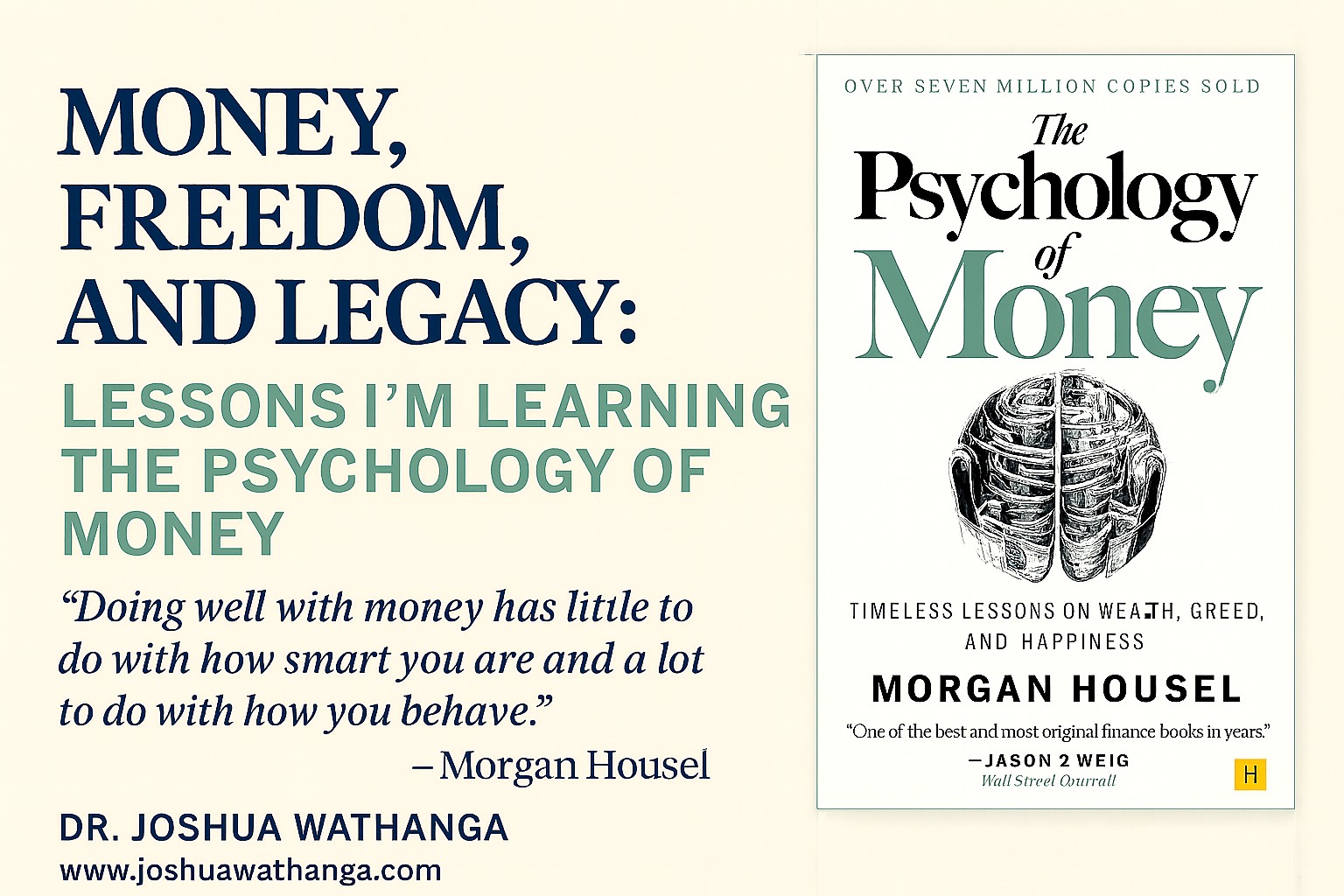
Money, Freedom, and Legacy: Lessons I’m Learning from The Psychology of Money
While I wasn’t naïve about money in my earlier years, I realize now that I missed structured financial literacy along the way. I relied on instinct, on lessons picked up from my parents, on trial and error. I wish I had read Morgan Housel’s The Psychology of Money, Darren Hardy’s The Compound Effect, or Robert Kiyosaki’s Rich Dad Poor Dad earlier. Their insights would have saved me both mistakes and missed opportunities—and would also have equipped me to mentor my children far better in financial literacy.
From Exclusion to Influence: Youth Inclusion and Leadership as a Systems Approach
The first article emphasized that demography is not destiny; choices matter. The second argued that we must move from counting people to planning outcomes. The third underscored that jobs — not just education — are the true lever of transformation. This final article focuses on the capstone: youth inclusion and leadership. The future of Kenya depends not only on whether youth are employed, but whether they have voice, agency, and power to shape systems. The task before us is to move youth from exclusion to influence.
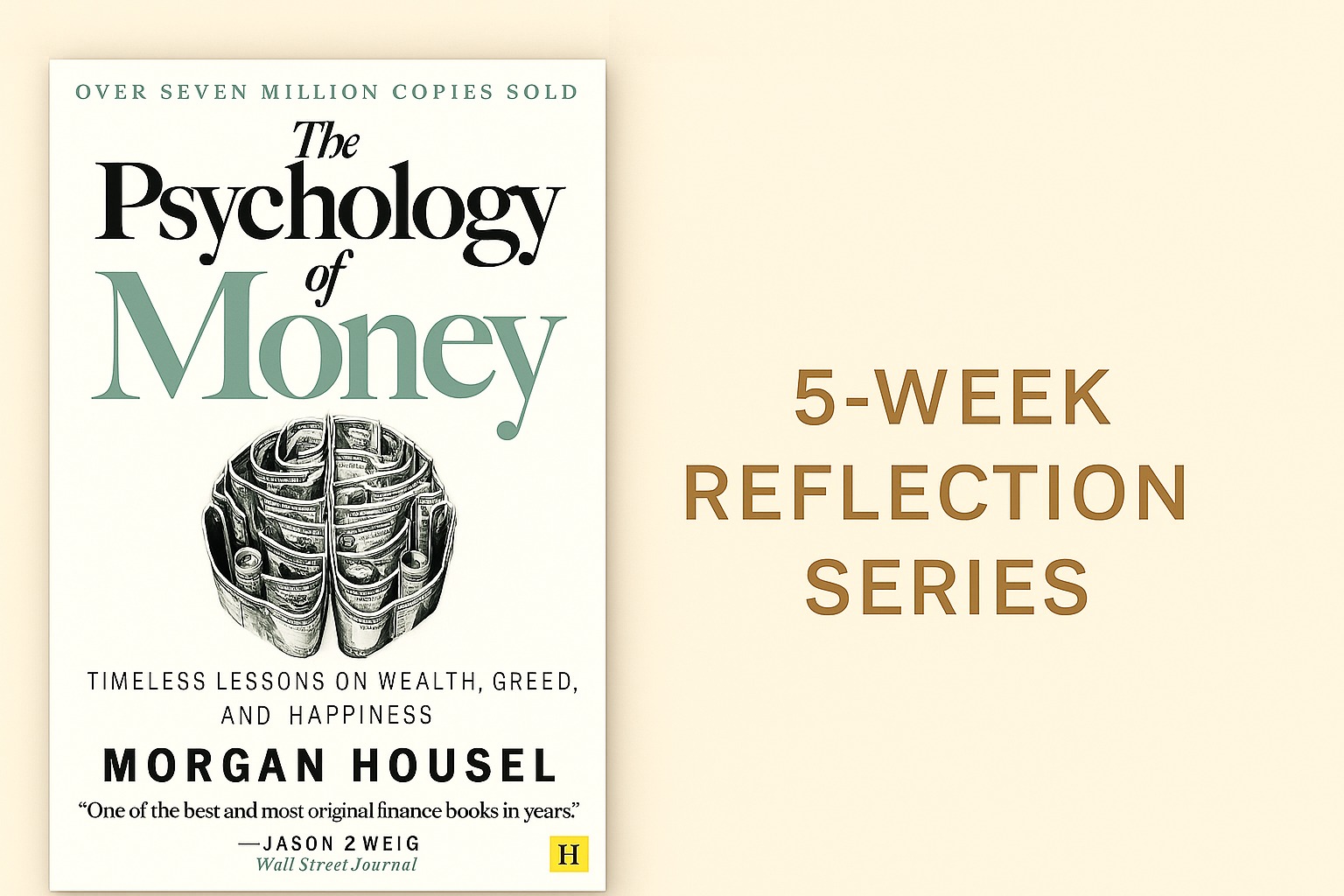
10 Things I Learned from The Psychology of Money by Morgan Housel
“Doing well with money has little to do with how smart you are and a lot to do with how you behave.” — Morgan Housel This book is not about how to beat the market. It’s about how to beat yourself—your fears, your greed, your impatience—and align your money decisions with long-term contentment.
Applying Emotional Intelligence to Lead, Mentor, and Pivot into My Next Season
Some leadership lessons don’t arrive gently. Years ago, I almost sabotaged my own leadership. I didn’t realize then that unmanaged emotions — mine and others’ — were steering key decisions. It wasn’t a lack of intelligence or experience; it was something deeper. Later, I discovered Daniel Goleman’s framework on Emotional Intelligence (EQ), and suddenly the patterns became clear. His insights gave language to what I had stumbled through in my leadership journey. I came to realize and to confront a hard truth: technical competence isn’t enough. Emotional intelligence — Goleman’s groundbreaking framework — is what shapes influence, resilience, and trust.
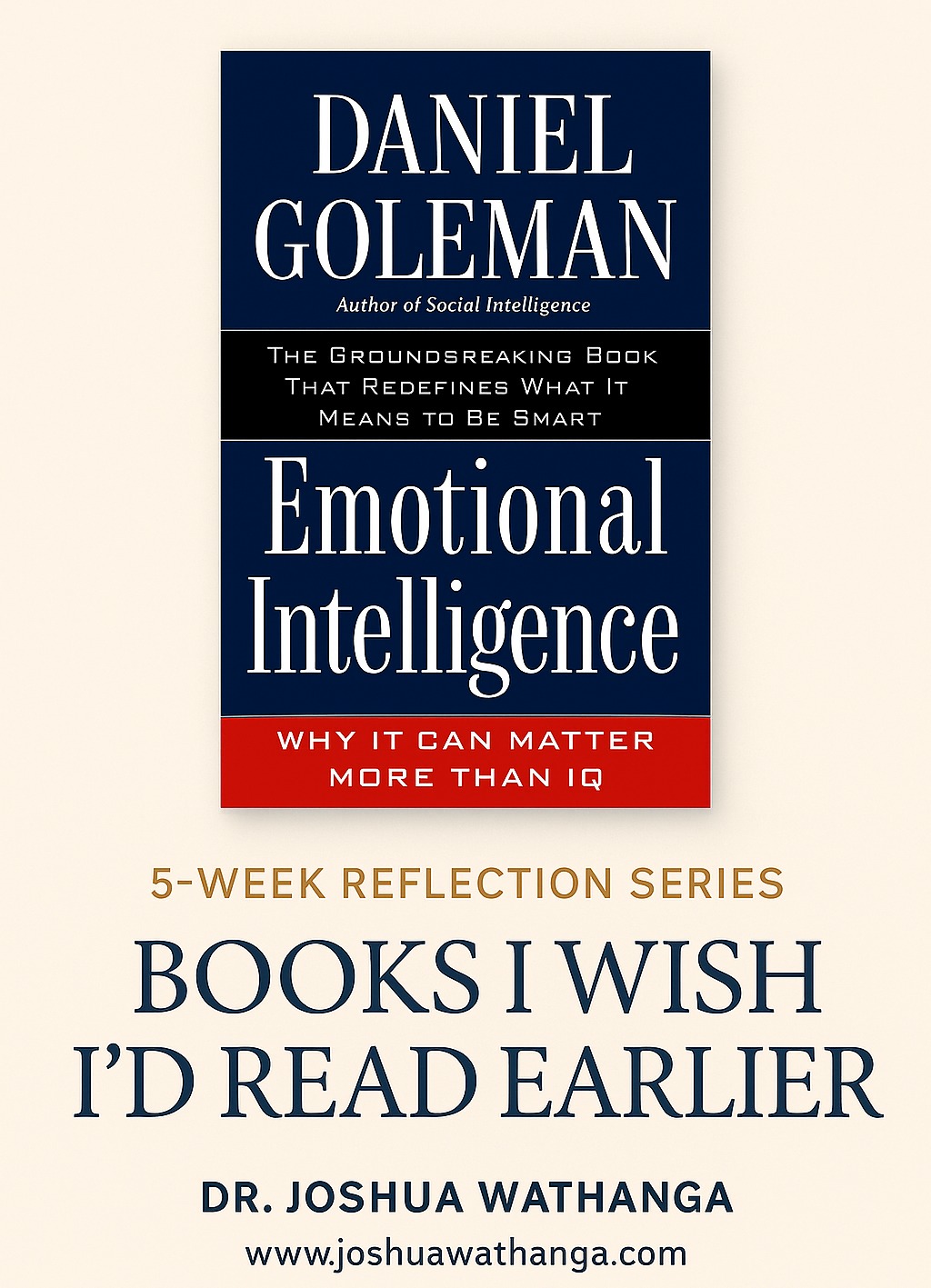
Emotional Intelligence- Why mastering your inner world transforms how you lead, relate, and thrive
Daniel Goleman’s Emotional Intelligence reveals why IQ and technical skill are not the strongest predictors of success. What truly shapes our effectiveness — in leadership, relationships, and personal fulfilment — is EQ, the ability to recognize, understand, manage, and harness emotions — both ours and others’. When Daniel Goleman published Emotional Intelligence in 1995, he challenged the long-held belief that IQ alone determines success. Goleman argued that our ability to understand, manage, and work with emotions — both ours and others’ — plays an even greater role in personal effectiveness, leadership, and relationships. This four-quadrant model organizes EQ into Self-Awareness, Self-Management, Social Awareness, and Relationship Management. Together, these skills influence how we make decisions, handle challenges, connect with others, and lead with empathy and purpose.
Jobs, Not Just Education: Why Employment Is the True Lever of Transformation
Kenya has invested heavily in education. From Free Primary Education in 2003 to 100% transition to secondary school in the last decade, access has expanded dramatically. The result is a far more educated youth population than in 2003. Yet, if education is the ladder, employment is the ground beneath it. And far too many Kenyan youth are climbing only to discover there is nowhere to stand. Over one million young people enter the labor market each year, yet the economy cannot absorb them.
Atomic Habits: What Small Choices Are Teaching Me About Big Change
Big change doesn’t come from big resolutions—it comes from small, faithful steps. Habits like journaling, walking, or mentoring compound over time to shape character, growth, and legacy