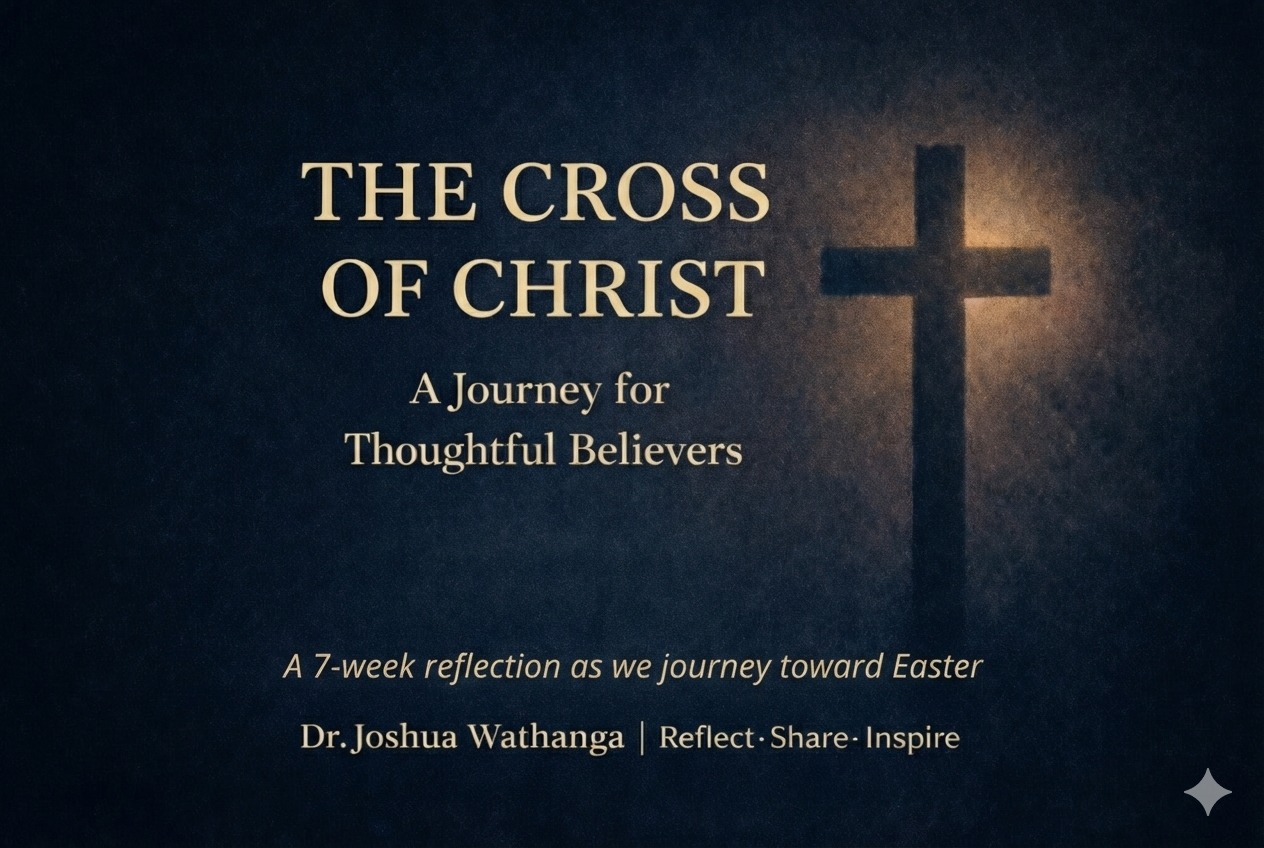
A Journey for Thoughtful Believers
As Easter approaches, many of us will hear familiar words about the Cross. We will sing them, recite them, and see them displayed in churches and homes. Familiarity can be a gift, but it can also quietly dull meaning. What once arrested us can become assumed, even rushed past, on the way to resurrection joy.
This short series is an invitation to slow down.
Over the coming weeks, I would like to reflect on the Cross of Christ, not as an abstract doctrine and not as a seasonal symbol, but as the central act of God upon which Christian faith stands. These reflections are offered as a journey, one step at a time, toward Easter, allowing the Cross to speak in its own weight and gravity.
This will not be a technical or academic series. I am not writing as a professional theologian, which I am not, nor for theologians. I am writing as a fellow believer, shaped by Scripture, sustained by the church’s teaching, and deeply aware that many thoughtful Christians carry serious questions about the Cross. What exactly was happening there? Why was it necessary? What did it deal with, and what does it mean for us now?
At the same time, this will not be a sentimental series. The Cross is not a vague symbol of love, nor simply an example of sacrifice. It confronts us with sin, justice, mercy, suffering, victory, and hope. It tells us something unsettling about ourselves and something astonishing about God. To treat it lightly is to misunderstand it.
Each week, we will pause at one aspect of the Cross and allow a single passage of Scripture to guide our reflection. Rather than moving quickly across many verses, we will stay with one text, listening carefully to what it says and resisting the urge to force conclusions too quickly. The aim is not to master the meaning of the Cross, but to stand before it attentively.
The journey will move through seven themes. We will begin by asking why the Cross was necessary at all. We will reflect on the problem of sin and what was truly dealt with at Calvary. We will consider what Christians mean when they say that Christ died “for us,” and why love at the Cross is neither soft nor vague. We will look at the Cross not only as suffering, but as victory, and we will ask what it means to live under its shape as disciples. Finally, on Easter Sunday, we will reflect on why resurrection does not replace the Cross, but fulfils it.
This is not a call to emotional intensity, nor to constant activity. It is an invitation to attentiveness. You may wish to read each reflection once and return to it later in the week. You may wish to sit with the Scripture passage quietly, without commentary. You may find that some weeks stir questions rather than answers. That is not a failure of faith. It is often how faith deepens.
Throughout the series, I will end each reflection with the same short prayer. Its repetition is intentional. Formation often happens not through novelty, but through returning again and again to what is central.
If you choose to walk through this journey, I invite you to do so without hurry. Easter will come, whether we rush toward it or not. The Cross, however, asks us to pause, to look, and to listen.
To stand before the Cross with care is never wasted time.
Prayer
Lord Jesus Christ,
we stand again before Your Cross.
Give us eyes to see what You have done,
hearts to trust what You have accomplished,
and lives shaped by the grace that flows from it.
Keep us from treating the Cross lightly,
or leaving it behind too quickly.
Teach us to live under its shadow,
until faith gives way to sight.
Amen.
No responses yet