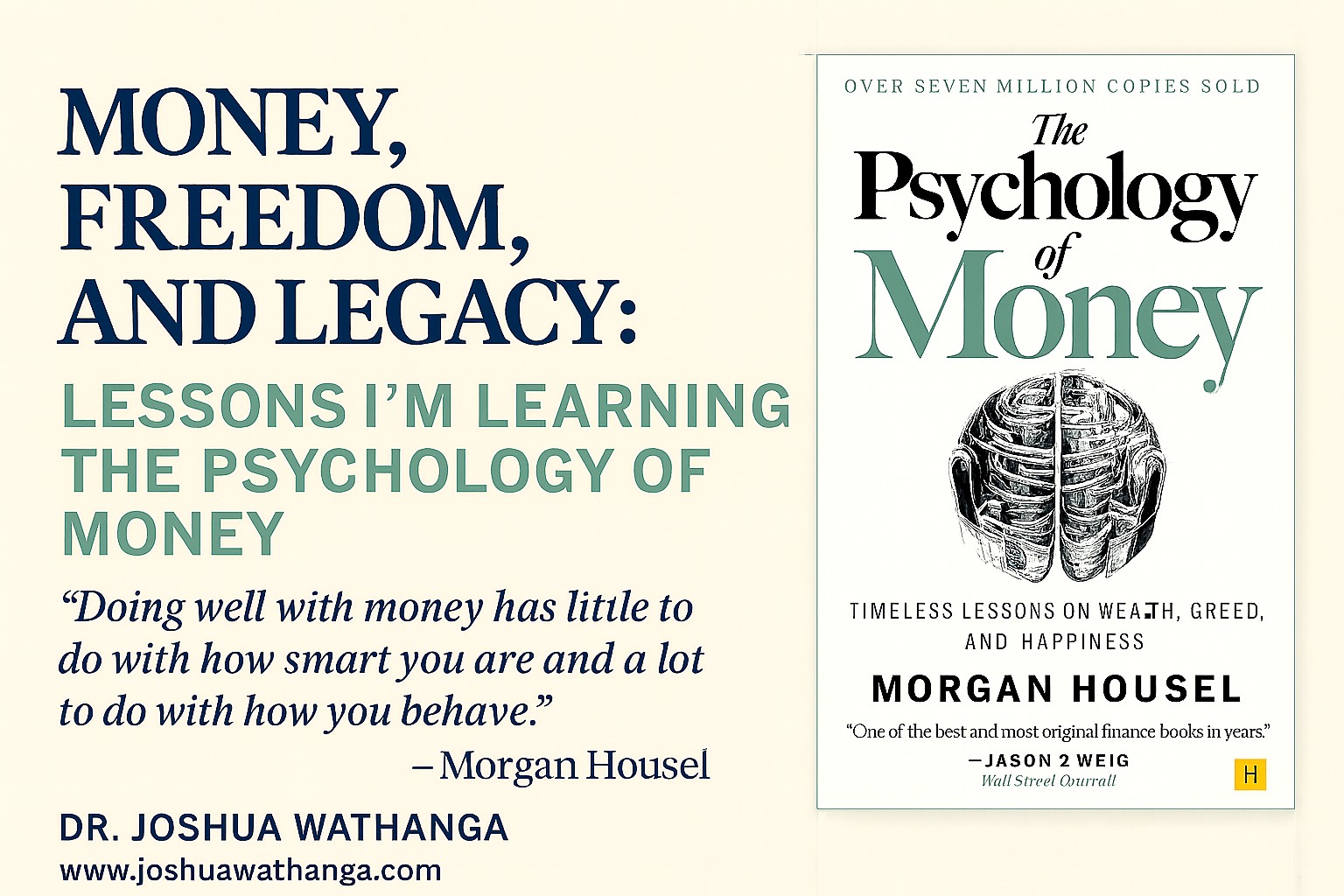
Money, Freedom, and Legacy: Lessons I’m Learning from The Psychology of Money
While I wasn’t naïve about money in my earlier years, I realize now that I missed structured financial literacy along the way. I relied on instinct, on lessons picked up from my parents, on trial and error. I wish I had read Morgan Housel’s The Psychology of Money, Darren Hardy’s The Compound Effect, or Robert Kiyosaki’s Rich Dad Poor Dad earlier. Their insights would have saved me both mistakes and missed opportunities—and would also have equipped me to mentor my children far better in financial literacy.
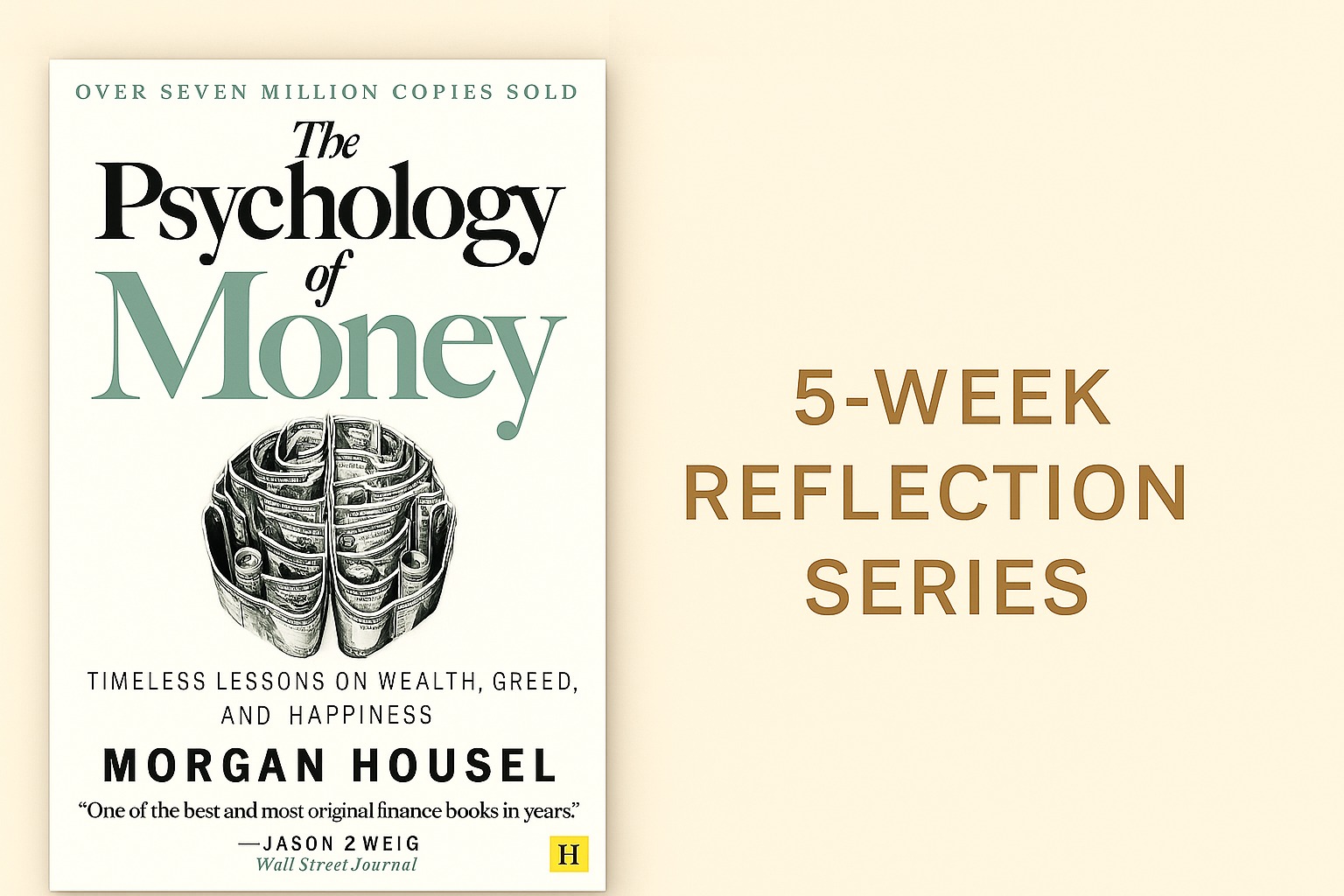
10 Things I Learned from The Psychology of Money by Morgan Housel
“Doing well with money has little to do with how smart you are and a lot to do with how you behave.” — Morgan Housel This book is not about how to beat the market. It’s about how to beat yourself—your fears, your greed, your impatience—and align your money decisions with long-term contentment.
Applying Emotional Intelligence to Lead, Mentor, and Pivot into My Next Season
Some leadership lessons don’t arrive gently. Years ago, I almost sabotaged my own leadership. I didn’t realize then that unmanaged emotions — mine and others’ — were steering key decisions. It wasn’t a lack of intelligence or experience; it was something deeper. Later, I discovered Daniel Goleman’s framework on Emotional Intelligence (EQ), and suddenly the patterns became clear. His insights gave language to what I had stumbled through in my leadership journey. I came to realize and to confront a hard truth: technical competence isn’t enough. Emotional intelligence — Goleman’s groundbreaking framework — is what shapes influence, resilience, and trust.
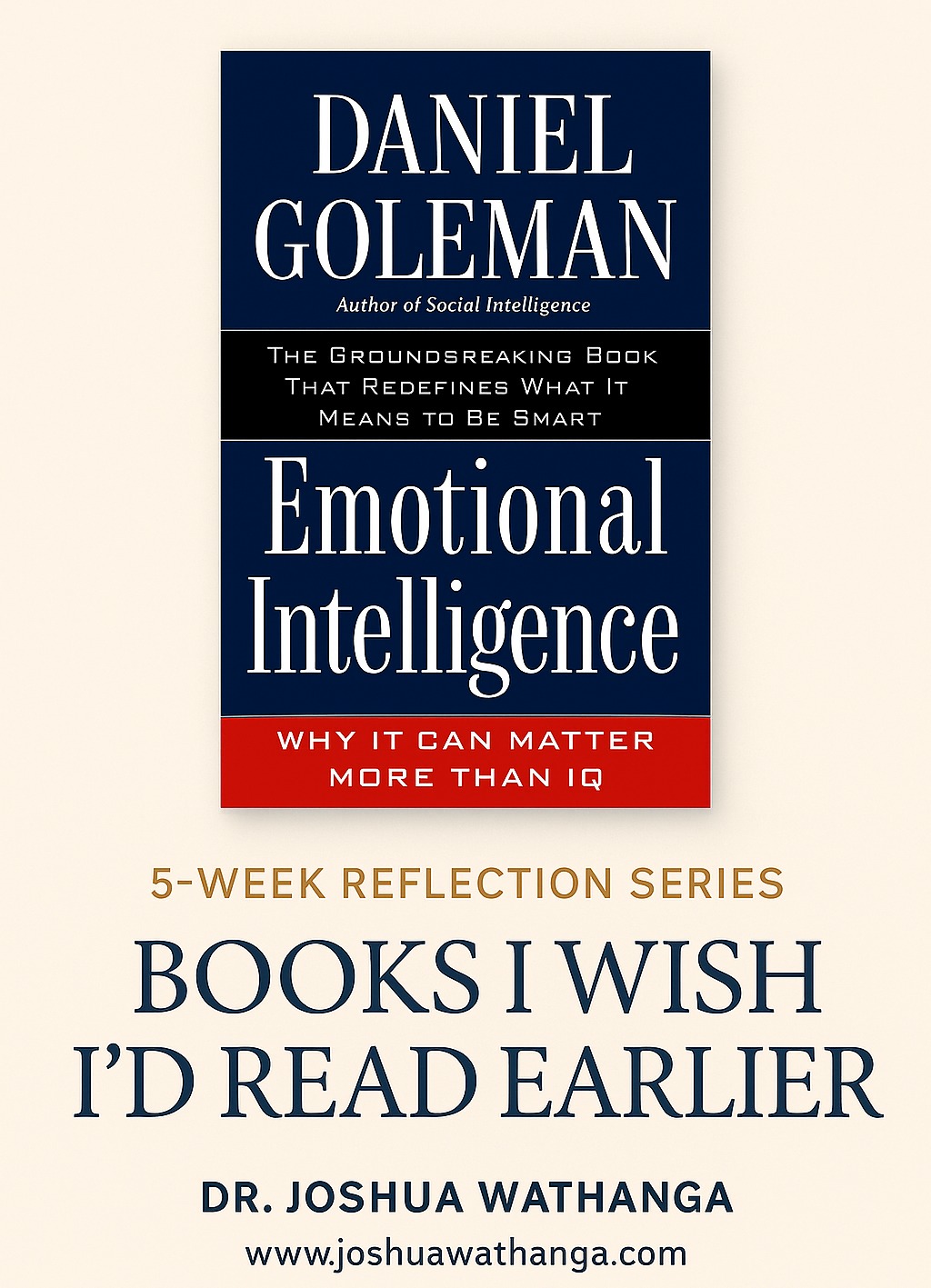
Emotional Intelligence- Why mastering your inner world transforms how you lead, relate, and thrive
Daniel Goleman’s Emotional Intelligence reveals why IQ and technical skill are not the strongest predictors of success. What truly shapes our effectiveness — in leadership, relationships, and personal fulfilment — is EQ, the ability to recognize, understand, manage, and harness emotions — both ours and others’. When Daniel Goleman published Emotional Intelligence in 1995, he challenged the long-held belief that IQ alone determines success. Goleman argued that our ability to understand, manage, and work with emotions — both ours and others’ — plays an even greater role in personal effectiveness, leadership, and relationships. This four-quadrant model organizes EQ into Self-Awareness, Self-Management, Social Awareness, and Relationship Management. Together, these skills influence how we make decisions, handle challenges, connect with others, and lead with empathy and purpose.